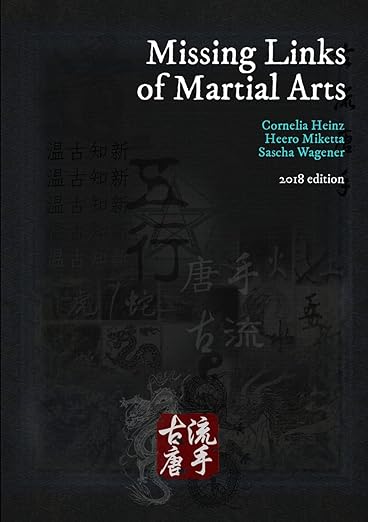
And here is the new edition: The Missing Links of Martial Arts describes the concept and also covers the curriculum and the way how to create an individual syllabus. Included three examples: The Dortmund Syllabus, the Aarhus Syllabus and the non-linear cycle Syllabus from Manchester.
Within the world of martial arts, there exists a great chasm of incompleteness. A chasm wherein a life changing art has been reduced to a mere sport, a shadow of its original and far more complete self. This concept has been developed to fill that ever widening void by addressing two of the most important traditions of martial arts. But it doesn't stop there, as it also has a close look at contemporary issues that should be covered by modern martial arts. Missing Links of Martial Arts introduces a comprehensive concept that connects Japanese Karate with its Chinese roots and modern applications.
Combat often looks chaotic. Especially in unarmed fighting, many things happen at once: movement, striking, pressure, balance, clinch, interruption, disengagement, re-entry. Because of this density, fighting is often experienced as unpredictable. But experienced practitioners frequently notice something else. Beneath the apparent chaos, recognizable structures begin to appear. Not fixed techniques. Not scripted sequences. But recurring […]
Keep what survives contact. This article shows how constraints, cycles, and partner pressure turn values into behaviour — and training into something that lasts. Sandro Sandten teaches partner-contact–oriented Karate with a pedagogical and sustainable design focus. His work centres on training systems that remain functional under real-life variability — honest partner interaction, clear constraints, and […]