Real-World Lessons for a Functional Karate System (Part 2)
Author: Tony Bolton
In Part 1, we looked at the mechanical and strategic gaps in modern training. But a fight is not just physics; it is physiology and psychology.
When the conversation stops and violence begins, you are not fighting the opponent in front of you. You are fighting your own biology.
1. The Adrenaline Dump
Under extreme stress, the body dumps adrenaline. Your heart rate spikes, your peripheral vision vanishes (tunnel vision), and you lose fine motor control.
That complex wrist-lock from the textbook? It likely won't work when your hands are shaking and your brain is screaming. This is why we prioritize "gross motor skills" in self-defence—simple, direct mechanics that hold up under pressure. We use scenario training not to act out a play, but to inoculate the student against the freeze response. We must learn to surf the adrenaline wave rather than drown in it.
2. The Law of Pre-emption
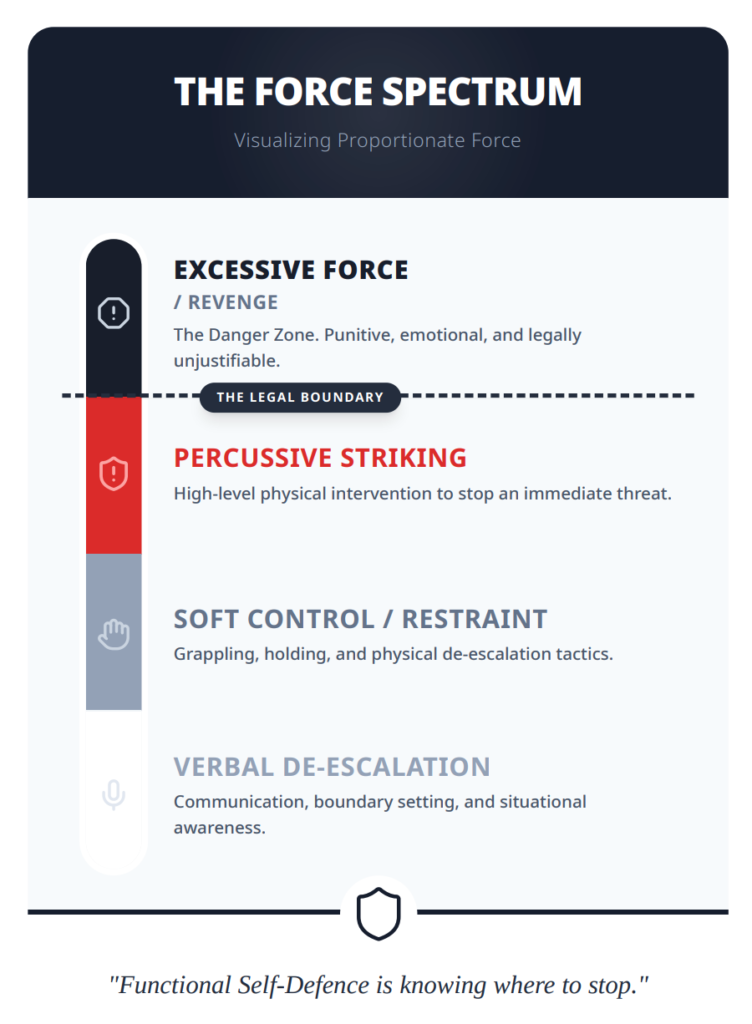
There is a dangerous misconception that you must wait to be hit before you can defend yourself. This is false.
UK law (and common sense) dictates that you do not have to wait for the first blow if you honestly believe an attack is imminent. If an aggressor is posturing and reaches for a weapon or draws back a fist, action is often safer than reaction. However, this requires the ability to read "pre-contact cues." We train to recognize the setup so we can act decisively—either to escape or to strike first if there is no other choice.
3. The Problem of Numbers and Weapons
The dojo is a one-on-one environment. The street rarely is.
If you face multiple attackers, the sport duel mindset will get you hurt. You cannot trade blows; you must stack your opponents, keep moving, and escape at the first opening.
Similarly, weapons change the calculus entirely. Against a knife, the only winning move is distance. We train knife defence not because it is high-percentage—it isn't—but because sometimes you cannot run. We must be honest with our students: weapon defence is damage limitation, not a movie scene.
4. Teaching the Next Generation
When we teach youth, the focus shifts. We are not training child soldiers. We are building confidence.
For children, self-defence is 90% soft skills: posture, voice, and boundaries. A child who walks with their head up and can shout "NO" firmly is less likely to be targeted by bullies or predators. If they must get physical, it is "stun and run," never "stay and fight." We adhere to strict safeguarding standards because our duty of care is the highest priority.
5. Strength with Restraint
Finally, we return to the core of Karate-Do. Why do we learn to break bones? So that we don't have to.
Gichin Funakoshi taught that karate begins and ends with respect. A functional system produces people who are dangerous but disciplined. We cultivate the capacity for violence so that we can walk through the world with the quiet confidence of someone who does not need to prove anything.
We study the old to understand the new. We bridge the gap between the art and the reality. That is the Missing Link.
Sensei Tony Bolton is Chief Instructor for England. He teaches in Manchester: www.manchester-karate.uk
Combat often looks chaotic. Especially in unarmed fighting, many things happen at once: movement, striking, pressure, balance, clinch, interruption, disengagement, re-entry. Because of this density, fighting is often experienced as unpredictable. But experienced practitioners frequently notice something else. Beneath the apparent chaos, recognizable structures begin to appear. Not fixed techniques. Not scripted sequences. But recurring […]
Keep what survives contact. This article shows how constraints, cycles, and partner pressure turn values into behaviour — and training into something that lasts. Sandro Sandten teaches partner-contact–oriented Karate with a pedagogical and sustainable design focus. His work centres on training systems that remain functional under real-life variability — honest partner interaction, clear constraints, and […]